Columbia Septic Tanks — Septic Installation, Pumping & Repair in Columbia, SC

Septic tank installation columbia sc and full-service septic work across Columbia, SC and the Lexington, Irmo, West Columbia, Blythewood, Chapin, Elgin, Gaston, Pelion area. Columbia Septic Tanks is a local referral and advertising service. All work is performed by independent, licensed septic professionals in the Midlands. Licensed septic professionals answer every call — no call centers, no chatbots.

Septic services in Columbia

Every service listed here is coordinated with a licensed septic contractor based in the Columbia area. We match you to the closest available crew, confirm scope with you before dispatch, and stand behind the work through completion.

What septic work costs in Columbia

Every job is quoted after we see the site — but here's what Columbia homeowners typically see across common services. Full breakdown with financing detail is on the Columbia septic cost page.

ServiceTypical range (Columbia)
Septic Tank Installation in Columbia, SCLocal range — see cost page
Septic Tank Pumping in Columbia, SCLocal range — see cost page
Septic Repair in Columbia, SCLocal range — see cost page
Drain Field Repair in Columbia, SCLocal range — see cost page
Septic System Replacement in Columbia, SCLocal range — see cost page
Septic Inspections for Home Sales in Columbia, SCLocal range — see cost page

All ranges are approximate and depend on lot conditions, permit requirements, materials, and site access. Financing options subject to credit approval.

Where we work

Columbia Septic Tanks coordinates crews across Columbia and the surrounding 8 towns:

Not sure if we cover your area? Call (803) 770-5203 — if we don't cover it directly, we usually know someone who does.

How it works

  1. You call or submit a callback request. A local coordinator returns your call within one business day — usually the same hour during business hours.
  2. We match you to the closest licensed crew. Columbia Septic Tanks works with independent contractors across the Columbia area. We pick based on proximity, availability, and job type.
  3. The contractor confirms scope and price. No surprise charges — all work is quoted up front, and you approve before anything starts.
  4. Work is completed and warranted. Your assigned contractor stands behind the work and communicates directly with you through completion.

Septic tank sizes and types in the Midlands

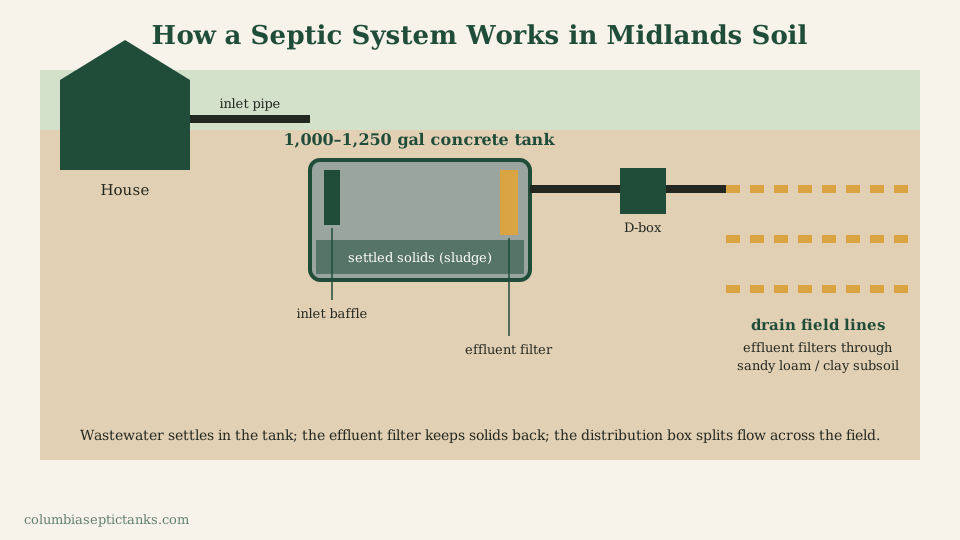
Most single-family homes in the Columbia area run on a 1,000-gallon concrete tank; larger households and homes with more than four bedrooms typically step up to 1,250 gallons. Concrete remains the default in South Carolina for durability under our soil conditions, though plastic and fiberglass tanks appear in retrofit situations where access is tight. Every tank has the same working parts: an inlet baffle that slows incoming wastewater, a settling zone where solids drop out, an outlet baffle or effluent filter that keeps solids from escaping, and a distribution box that splits flow evenly across the drain field lines.

Two components matter more than homeowners expect. The effluent filter — a simple screen on the outlet tee — is the cheapest insurance a septic system can have, catching suspended solids before they clog drain field lines that cost thousands to replace. And a tank riser, which brings the access lid to grade level, turns every future pump-out from a digging job into a ten-minute service call. If your tank was installed before risers became standard, adding one during your next pumping visit usually pays for itself by the second service.

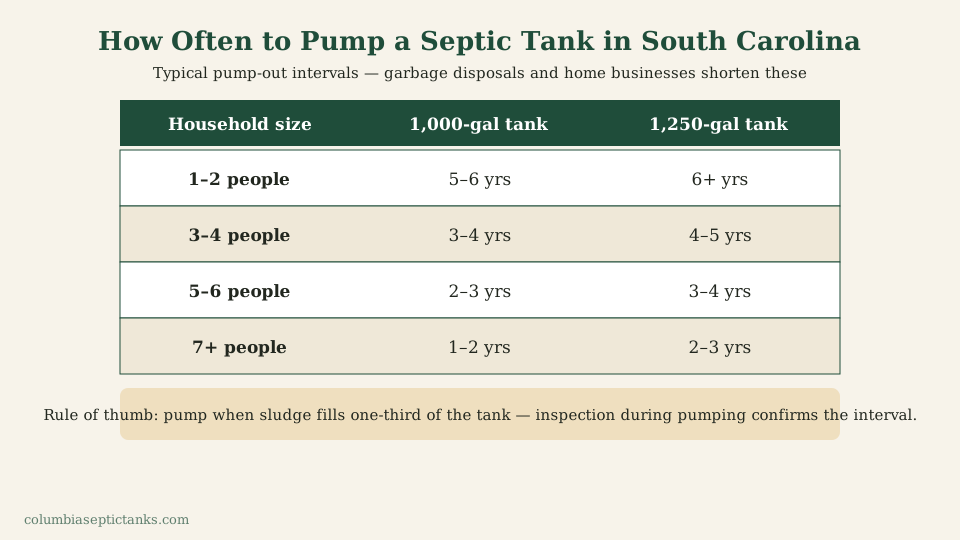
Septic tank pumping frequency chart by household size and tank size for South Carolina homes

Why septic systems fail in SC

Columbia sits in a region with specific soil, water table, and regulatory conditions that shape how septic systems perform and how often they need attention. Generic advice from national sources often misses these local nuances — which is why Columbia homeowners frequently pay for solutions that don't actually address the underlying issue.

Need a quote? Free, no obligation — Get A Free Quote or call (803) 770-5203.

  • SC Department of Environmental Services (SCDES) septic permitting
  • Richland County / Lexington County health regulations
  • Midlands sandy loam and clay subsoils; percolation testing
  • conventional gravity systems vs mound systems
  • effluent filter, inlet/outlet baffles, distribution box
  • 1,000 and 1,250-gallon concrete tanks
  • Lake Murray watershed considerations

Understanding these factors is why we insist on local crews — a contractor who has installed dozens of systems in Columbia clay or SC sandy loam has seen the failure patterns firsthand. They know which components fail first in local conditions, which permit inspectors look for what, and which system designs hold up over a full 20-30 year service life vs which ones need major intervention within a decade. That accumulated pattern-recognition is impossible to replace with a checklist.

The other reason local matters: response time. When a system backs up, homeowners want a truck on-site the same day, not a call center transferring the case to a regional dispatch team three time zones away. Our contractor network is built around neighborhood proximity — most jobs are handled by a crew within 20 minutes of the property.

Midlands soil: why it decides everything

The single biggest factor in how long a septic system lasts in the Midlands is what’s underneath it. Columbia Septic Tanks connects homeowners with installers who work in these soils every week, and the pattern is consistent: sandy loam east and south of Columbia drains quickly and forgives a lot, while the heavier clay subsoils common in parts of Richland County and toward Blythewood hold water, slow percolation, and punish an undersized drain field. That’s why the SC Department of Environmental Services (SCDES) requires a soil evaluation before any new system is permitted — the soil report, not the installer’s preference, determines whether your property gets a conventional gravity system or an engineered alternative.

If a percolation test has ever failed on your lot, that doesn’t mean septic is impossible. It usually means the design shifts: a mound system, a shallow-placed drain field, or an engineered solution matched to the seasonal water table. Properties near Lake Murray and along the watershed get extra scrutiny, since effluent that surfaces in high-water-table ground can reach the lake. A correctly designed system protects both your property value and the water everyone here fishes and swims in.

Diagram of a septic system in Midlands soil: tank with inlet baffle, effluent filter, distribution box and drain field

Common septic problems we solve in Columbia

Across thousands of jobs across the Columbia metro, a handful of failure patterns account for the majority of service calls. Understanding these patterns helps homeowners spot problems earlier — when they're cheaper to fix — and know what to expect from a properly-diagnosed repair.

Need a quote? Free, no obligation — Get A Free Quote or call (803) 770-5203.

Slow drains and gurgling toilets

Often the first sign of a full tank or a compromised drain field. In Columbia, the timing is usually 4-6 years since the last pump-out, or after a stretch of heavy rain that saturates the field. Diagnosis is quick: a pump-out and inspection tells us whether it's just a full tank or something more.

Wet or soggy areas over the drain field

A drain field that's failing hydraulically will surface effluent — often smelled before seen. In SC's soil, this can look like a slightly greener patch of grass or a wet spot that persists days after rain. Once identified, options range from restoration (often possible if caught early) to partial or full replacement.

Backups after rainfall

Persistent backups after every rainstorm point to a waterlogged drain field or a compromised system layout. Occasional rain-related slowdowns can be normal in Columbia clay conditions; recurring backups are a signal that professional evaluation is worth doing before the problem escalates.

Sewage smell inside or outside the home

Odors are typically vent-stack issues, tank overflow, or a distribution box problem. In many cases the fix is relatively small — a vent repair or baffle replacement — but the smell tends to prompt action fast, which is when catching underlying problems early pays off.

System age (20+ years) with no recent inspection

Older Columbia-area systems often have baffles, distribution boxes, or drain field elements approaching end-of-life. A routine inspection — even when nothing is obviously wrong — flags issues before they become emergencies. Timing this before a home sale is smart, since inspections come up at closing.

Failed inspection during a real estate transaction

Real estate septic inspections in SC can uncover problems that a homeowner didn't know existed. When this happens mid-transaction, timing matters — we work with agents and homeowners to diagnose fast and get realistic repair or replacement quotes in front of everyone within days, not weeks.

Slow drains after heavy rain

Midlands storms saturate the ground fast, and a drain field sitting in saturated soil has nowhere to send water. If every fixture in the house slows down during a wet week and recovers when the ground dries, the system is telling you the drain field is at or past its hydraulic limit. Sometimes the fix is behavioral — spreading laundry loads across the week instead of one Saturday marathon. Sometimes it’s mechanical: a clogged effluent filter, a broken distribution box sending all flow to one line, or root intrusion. A camera inspection settles the question before anyone starts digging.

Six warning signs a septic tank is full: slow drains, odors, wet drain field, sewage backup, gurgling pipes, lush grass

What to expect from a Columbia septic job

Every job is unique but the general flow is predictable. Knowing the sequence helps homeowners plan around it and spot when something is off.

Need a quote? Free, no obligation — Get A Free Quote or call (803) 770-5203.

  1. Initial phone consult (day 0). Coordinator gets basics: address, symptoms, urgency, access. Sets expectations on timing.
  2. Site visit and diagnosis (day 0-1). Contractor arrives, inspects the system, opens the tank if needed, checks the drain field, reports findings and recommendations verbally on-site.
  3. Written quote (day 1-2). A firm number in writing, including scope, materials, permit costs, and a timeline. Any options (e.g., repair vs replace) are laid out.
  4. Permit filing where required (day 2-5). Most substantial work in SC requires permitting. Timeline depends on county inspection schedules.
  5. Scheduled work (day 5-14 typical). Actual work — pumping, repair, or install — happens once permits clear. Urgent work often gets same-day or next-day slots regardless.
  6. Final inspection and close-out (day 14-21). County inspector signs off on permitted work. Homeowner receives a completion packet.

Urgent work compresses this timeline dramatically — the sequence is the same but many steps collapse into hours instead of days.

Permits and inspections: how SCDES approval works

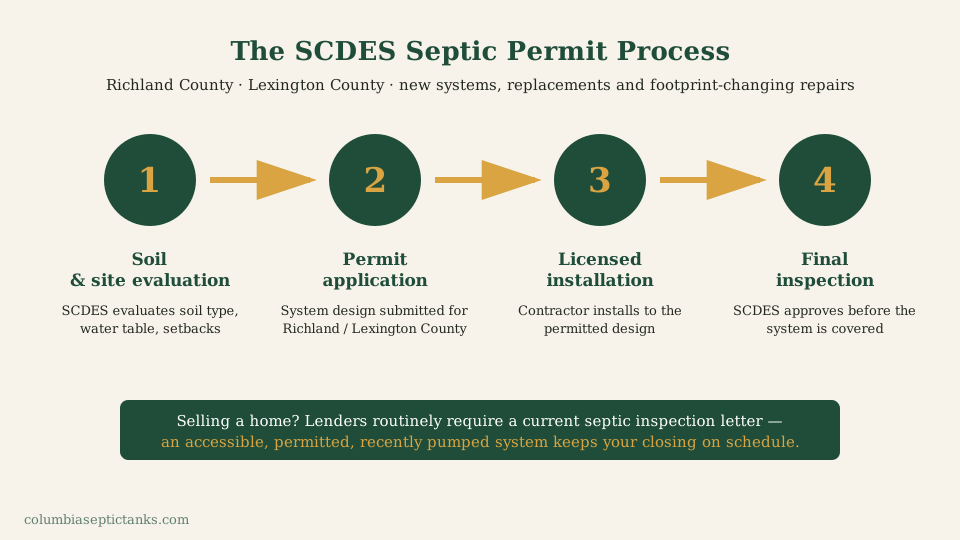
New systems, repairs that alter the system footprint, and replacements in Richland and Lexington County all run through SCDES permitting. The sequence is consistent: a site and soil evaluation first, then the permit application with the system design, then installation by a licensed contractor, then a final inspection before the system is covered and put into service. Skipping steps isn’t a shortcut — an unpermitted repair surfaces at the worst possible time, usually during a home sale when the buyer’s lender asks for a septic inspection letter.

That letter matters more in the Midlands market than most sellers realize. Lenders and buyers routinely require a current septic inspection before closing, and three things decide how smoothly that goes: whether the tank is accessible, whether the system has a permit history, and whether it’s been pumped on schedule. The professionals in our network handle septic inspection letters for home sales across Richland and Lexington County — if a sale is on your calendar, dealing with the septic file early is one of the cheapest ways to protect your closing date.

SCDES septic permit process in Richland and Lexington County: soil evaluation, permit, licensed installation, final inspection

Frequently asked questions

How long does septic work take in Columbia?

Most single-visit jobs finish same-day. Installations and replacements typically run 2–4 days depending on soil, permit timing, and equipment access.

Do you serve all of Lexington, Irmo, West Columbia, Blythewood, Chapin, Elgin, Gaston, Pelion?

Yes — we coordinate crews across Columbia and the surrounding towns. See the service area list above for cities we cover.

What does a job cost in Columbia?

Ranges vary widely based on lot conditions, permit requirements, and system type. See our Columbia cost guide for typical ranges by service.

Are permits required?

Most septic work in SC requires county or state-level permitting. Our permit-related guides explain the process and typical timelines.

Do you offer financing?

Payment plans are available on qualifying work. Financing options subject to credit approval — details discussed at quote time.

How do I get started?

Call (803) 770-5203 or use the callback form. We'll gather basics, match you to a local crew, and coordinate a same-day or next-day visit.

What areas do you cover?

Primary coverage: Columbia and Lexington, Irmo, West Columbia, Blythewood, Chapin, Elgin, Gaston, Pelion. Adjacent towns often covered — call to confirm.

Are you licensed and insured?

Every contractor in our network holds the appropriate SC septic license and carries liability insurance. Documentation available on request.

Do you handle emergencies?

Same-day and after-hours coverage available for backups and system failures — call to check availability in your area.

What if my system is old?

Older systems often need a mix of repair and updating. Our team assesses whether repair is worth it or if replacement is the better long-term investment.

Financing options available

Ask your contractor about monthly-payment options at quote time. Financing subject to credit approval.

Ready to get started?

Call (803) 770-5203 for immediate service, or use the form below to request a callback.

Need a quote? Free, no obligation — Get A Free Quote or call (803) 770-5203.

By submitting, you consent to receive a return call about your request. We do not share your information.

📞 Call (803) 770-5203 Get A Free Quote